Skip to content
Chitra Nayak
  • Paintings
  • Glass
  • Jewelry
  • About me
  • “She Said, She Said”​: Life-Lessons from Women Leaders
  • Ready for the Big League? (a.k.a. Selling to Enterprise)
  • AI in the Boardroom: Risk and Innovation
  • Growth traps…Proceed with Caution
  • Telling Your Story: The Board Bio
  • When It’s Time to Go, You Gotta Go
  • Follow the Leader
  • “Hello? I’m calling to…”
  • Drowning in Data? Make It Work for You
  • Sales Prospecting: Get Your Message Thru
  • “Meditate? Who, Me?” Yes, You
  • The Vision Thing: It’s a Must-Have
  • So You Want to Be Hired? Starting on the Sales Ladder
  • I Am Woman…Boo-hoo? Not!
  • Teetering on the Career-Family Tightrope?
  • Your Recruiting Machine on Steroids: Run Recruiting Like Your Sales Pipeline
  • Don’t Ask for a Raise, Trust Karma
  • Not-So-Secret Sauce for Customer Delight
  • You Say Tomato: Leading a Global Team (and Still Sleeping at Night)
  • Five Steps to a Happy Boss…and a Happy You
  • Can You Be Superwoman? Having It All…Or Not
  • Leading with Gratitude…A “How-To” Guide
  • Need a Mentor? How to Find “The One”
  • You Go, Girl! Managing Your Career
  • The Invisible Woman Syndrome: Five Tips to Become Visible

Can You Be Superwoman? Having It All…Or Not


Can You Be Superwoman? Having It All…Or Not

We all know women like this: a powerhouse career, two gorgeous kids, well-toned body, time for the book club, the gym, the theater, date nights with her spouse and glamorous vacations. We look at these women in deep envy, all the more now that we have a full view of their latest exploits on Facebook…what used to be an occasional exchange of weekend activities passing in the hallway is now ever-present in our consciousness.

Why can’t the rest of us be like that? What magic potion are they drinking? I came to the conclusion, having spoken to some and read about others, that these women don’t need, or get, much sleep. And I certainly do. But it doesn’t stop me from feeling vaguely inadequate about not “doing it all, having it all, all the time”.

It is interesting that the American constitution proclaims that all men (and presumably all women) should have equal rights: Life, Liberty and the Pursuit of Happiness. Note, not “Happiness”, but the “Pursuit of Happiness”. Does that set us up to strive ceaselessly for that elusive goal of Happiness? Does it decree a life spent going after the Holy Grail, being the Perfect Woman, which by implication will finally make us happy?

I read recently that happiness is 90% about what you make of your circumstances, i.e. most of it comes from within, not from the outside. You frequently hear about all the benefits of mindfulness and living in the moment. These observations lead me to the conclusion that, perish the thought, maybe one doesn’t need to have it all. What you do need is the ability to look at your own life and think about what works, and what you can be happy about.

An analogy I am very fond of is the cow in the English meadow. In British children’s books, there is often a cow in a green meadow, with a stream going through it, and a sunny sky above. The cow is happy, it radiates bovine peacefulness. There may be more exciting pastures beyond the meadow to explore, and it does rain sometimes, but the cow doesn’t worry about it. It is busy enjoying the life it has.

If you think about those superwomen and supermen who seem to have it all, remember the question asked of people nearing the end of life: “What do you wish you’d done differently with your life?” Usually the answer is about spending more time with family and friends, less time at the office, or sometimes less time cleaning the house.

So what if you define happiness not as something you achieve when you become superwoman, but something that is about the everyday successes and good-feeling moments? Your latest project at work launched successfully, your kid told you a great joke (or not such a great joke, but you love to hear her laugh), the last-minute dinner you pulled off means a happy group of friends got together, so what if you ordered take-out and ate off plastic plates? Sure, you have stacks of Business Week or the latest business best-seller that you mean to read one day, but if US Weekly or People magazine gives you a little mindless entertainment, go for it!

I am not suggesting that striving to do better and achieve more is a bad thing. I hear most Type A personalities get ahead because of deep insecurities that they are trying to overcome. I am suggesting that you should not make yourself unhappy, or less happy, because looking forward to “what might be” diminishes your satisfaction in “what already is”.

I propose to you that it’s not really about having it all…no one truly does. It’s about learning and recognizing that life is pretty good after all, and sure, sometimes you compromise to make it all work, but that’s just fine, after all, you and I (and everyone else, however glossy their lives seem) are only human. I am not saying it is easy to figure out the compromise, but as they say, life is like a blanket that is just a little too short. “You pull it up and your toes rebel, you yank it down and shivers meander about your shoulder; but cheerful folks manage to draw their knees up and pass a very comfortable night.”

Originally published on LinkedIn

Image Courtesy Maryann Kikerpill

Leading with Gratitude…A “How-To” Guide


Leading with Gratitude…A “How-To” Guide

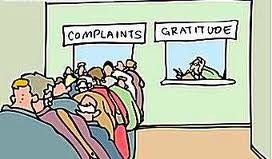
How many of us regularly stop to thank and recognize others at work who make our lives a little bit easier? Life is so insanely busy, and it’s hard enough trying to get through the day-to-day and week-to-week, how do you even make time for thanking people?

The benefits of recognizing people for their contributions are far-reaching and well established. Most people become more engaged, more energized, and contribute more when they feel valued and recognized. Additionally, they stay at the company longer and are more productive. What’s not to like? Why is it, then, that so many feel that their company or their manager does not value them enough? It only takes a moment to thank someone, and it makes a big difference.

You may ask, what’s in it for you? When people help you get something done at work, showing appreciation has enormous benefit, both for your company overall (happier, more engaged employees) as well as, in the end, for you and your career. While this is far from the end goal, it is a rewarding side benefit. When you thank people and teams you are leading or engaging with, and give them recognition for work they have done, the next time you need something, they will be more likely to want to listen and engage with you. While people prioritize their work based on company or team priorities, there is often subconscious prioritization based on “who’s asking”. If you have a reputation for appreciating and recognizing the work, and showcasing the value of the outcomes to others, it gets around.

Additionally, showing gratitude on a regular basis is now scientifically recognized as a contributor to an individual’s well-being and health. So it’s a win-win-win…the receiver, the giver and the company all benefit.

It is hard to remember to thank others on a regular basis, given all the other priorities in today’s fast-paced world. I remember one senior executive who, once a year at Christmas, would hand-write personalized messages of appreciation to each person on his team. These were deeply valued by the recipients, and it was a wonderful gesture from someone who knew that remembering to say thank you didn’t come naturally to him. Ideally, a little more often would be even better. I am sharing some best practices I have learned from watching strong leaders around me over the years.

Build Two Thank Yous Into Every Friday: We all know it is critical to catch issues before they become major problems that come to the attention of our key stakeholders, or bosses, or superiors. So we are all super-watchful for anything going wrong. However, when things go right, it often passes unnoticed. A manager I knew decided that on the commute home Friday night, he would thank at least two people, leave at least two messages. He said it was amazing how many people he could think of that he needed to thank, when he made it a regular part of his routine. Frequency matters.

Find the People in Jobs that Never Get Thanked: Some years ago, my boss led a team of 7,000 people in sales and customer service. She was known as a tough operator, but also a visionary leader who inspired passion among her teams. One example of the stories that made her a legend? When she traveled to the call center in another city, she visited and spent time at midnight with the customer support team on the overnight shift. This team had never met a senior executive, let alone being recognized and appreciated by one. Think about the sometimes invisible roles and unsung heroes that help to keep everything running smoothly. Then find these people and make your recognition heard.

Celebrate the Successes: Too often, we go straight from one deliverable to the next, especially given the urgency that often surrounds many work environments. When an initiative you are leading or benefiting from is successfully completed, take the time to celebrate. Get the team together and make time to be happy and hang out together, to delight in the satisfaction of a job well done. The benefit of increased bonding alone makes this worth doing, in addition to the boost in self-esteem and feeling of recognition for all team members. Is it a cross-functional team from different parts of the company? Then you gain even more benefit for any future initiatives.

Remember Teams Win, not People (and usually not just one person) Some companies have a “hero” culture. They tend to recognize one person for a Big Idea, sometimes announcing it with great fanfare and laudatory praise. In reality, most Big Ideas would never see the light of day if there was not a team working to execute and deliver on them. As a company gets bigger, it takes a village to make things happen, and it gets more and more important to recognize the groups of people that drive successful execution of an initiative, versus just the one person who conceived of the idea or led the team.

Shout it from the Rooftops – and let his/her boss know too: The more people you tell about the wonderfulness of the people and the project, the better, assuming, of course, that the audience you choose has some association with and some understanding of the value delivered. And especially make sure the person’s boss is made aware. Many projects are broad and cross-functional, and not necessarily in clear line of sight to the managers of those on the team. It becomes even more important in these cases to ensure that the right people know. Make sure you communicate the value of the initiative, and the effort of the team responsible, to senior management in all groups involved.

In the words of Ralph Waldo Emerson, “Cultivate the habit of being grateful for every good thing that comes to you, and to give thanks continuously. And because all things have contributed to your advancement, you should include all things in your gratitude.”

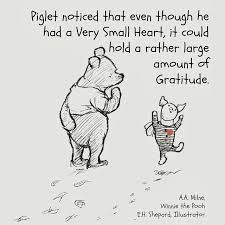
And, on a less philosophical note, in the words of A.A. Milne in Winnie the Pooh, “Piglet noticed that even though he had a Very Small Heart, it could hold a rather large amount of Gratitude.” May we all find this to be true of ourselves. Try leading with gratitude and you may thank me for it.

Originally published on LinkedIn

Need a Mentor? How to Find “The One”


Need a Mentor? How to Find “The One”

“You need to find a mentor to advise you in your professional life.” How many times have you heard this? There is no doubt that getting guidance as one navigates the sometimes turbulent waters of one’s career is invaluable. Some think that this means finding The One Person who can help you throughout your career. In reality, your guidance may come from many mentors, each uniquely suited to help you with a particular stage in your career, or with decision-making at specific crossroads in your life.

Studies have shown that women typically have a more difficult time finding a mentor, but it isn’t easy for anyone, man or woman. Formal company-driven programs to connect people with mentors often do not work well, as the “magic” of the connection cannot be formulaic. You are the best person to decide what you need and how best to find it.

Some tips to consider in your quest for mentors:

Finding Mr/Ms Right: Think about what you need advice on. For example, if you want to sound more credible in meetings, or to be more visible at work, look for someone who has been successful in demonstrating these characteristics. It is useful to look for someone with a style similar to yours, so that you can translate their advice in a way that is relevant to you. Think broadly, the right person could be inside or outside your company. It could be someone of the same gender, or not, as either can provide additional and different perspectives. You may find what you are looking for in one of your peers. In looking for someone senior, it’s best to look one or two levels up. Someone too senior may be too far removed from issues you are dealing with to be able to meaningfully advise you. Ideally, it should be someone who you have connected with, however briefly, in some context, so that when you reach out, your targeted mentor does not say, “Who is this person?”

Start Small: Most people do want to help others, but everyone’s lives are very full. When you ask to meet, do not use the M word. Do not ask for a life-long, or even year-long, commitment from a prospective mentor. Ask to have coffee and get some advice. If it goes well and it feels like you have made a good connection and are getting useful advice, ask to meet every three months, or maybe six months, to share progress and continue the conversation.

Keep it Specific: When you reach out to someone in your network to ask for advice, be specific in terms of what you are looking for. A question like “How can I get ahead in my career” makes it hard for anyone to help you. Discuss specific challenges you are working on, for example, communication style, executive presence, or dealing with conflict. This allows for a more explicit and actionable discussion. These elements also provide the building blocks which, if successfully implemented, ultimately lead to getting ahead in one’s career.

Stay in Touch: It may be that your mentor at a particular time in your career helps you get to the goal you were reaching for, whether you were in quest of a promotion or a stronger voice at the table. And it may be that you no longer need their advice once you achieve that goal. Remember to stay in touch; they care what happens to you, and how you progress. And they may help you, or you help them, again some day.

Give Back: As you reach for the next milestone in your career, and the excitement of the next Big Thing, it is important to remember that you are very likely at the point in your career where you, too, can act as a mentor for others. There are always those less experienced, new to the company or the team, who could use help in navigating their way. Make it clear to those around you that you are open to helping others on their team or in their network.

I used to feel that I had failed at finding a “Mentor”, defined as that one person who gives you guidance through your career. In reality, I feel fortunate that there have been many who have shared their time and insights to help me in my quest for the best path forward, and who still care about my success professionally and personally. Remember you have to take charge of your career and know what you need, and remember you have to ask first. You will find that there are many who will answer.

Originally published on LinkedIn

You Go, Girl! Managing Your Career


You Go, Girl! Managing Your Career

“What do you want to be doing in five years? In ten years?” You know, the question that people sometimes ask in interviews? If you ask senior executives, while some stayed in the same functional area all their lives, many will tell you that they started out their careers doing something completely different, and had no idea that their career would take the path it did.

An openness to all possibilities, in many ways the opposite of a clear and structured path forward, allows one to notice and take advantage of opportunities. Sometimes this may be off the beaten path from your current True North. Often it can take one in directions very different than the one in which you originally started. Women are often less likely to take risks, less likely to have the confidence needed to make change happen in their careers, but this advice is relevant to men too.

Figure out your passion, rinse, repeat: What do you enjoy doing? What gets you energized? What do people value in you? How do you differentiate yourself? Sounds simple, but you need to find the intersection of these things to understand how to position yourself and to leverage what you do well. It may be that you enjoy a functional area such as marketing or finance, or your passion may be more generic, for example, you are great at growing and scaling a business, or at fixing things that are broken. Also, do not assume that your passion will always stay the same. In fact, ideally you will continue to build on what you do well, which takes you to the next level, where you may need new skills and develop new passions. At points in your career trajectory, you may find that different things drive your energy and become your hallmark.

Look backward and forward every year: Any job is worth doing as long as you are learning something that adds to your skill sets and your marketability. Advice I give fresh graduates: the first job is the stepping stone to the next job, and should be viewed as such. This is equally true of the next, and the next, and the next job. As long as you can add something to your professional toolkit, it is a valuable experience. But how long to stay in a job? If you are lucky, you may be at a company that is growing fast and you have opportunities to move, either up or laterally. It is important to assess, at the end of every year, what you achieved and what you got from the past year, and what you plan to get from the next one. What you need at any point in your career is a very personal decision. I would just urge that you make the decision mindfully versus allowing it to be a passive outcome.

When it’s not working, don’t wait to figure out whose “fault” it is… a.k.a. When it’s time to go, you gotta go. Most of us approach our careers with positive intent and effort. We work to make the companies we are at successful. But things change. Sometimes the needs of the group have evolved, sometimes a new boss has a different view than you do. Clearly you owe it to yourself to give it a good, solid shot to see if you can adapt to make it work, both for yourself and for the company. But if you reach the point it doesn’t feel good to go in to work in the morning, it’s time to look around. There is no point in trying to assess blame or figure out who is at fault. Take charge and fix it; and sometimes the right way to fix it is to make a move.

Stay open to reinventing yourself: Be opportunistic about managing your career. If something exciting comes along, even if you haven’t done anything like it before, consider taking the leap. Do not fall prey to the confidence gap. If others are open to taking a risk on you, be ready to take a risk on yourself as well. Don’t spend too much time agonizing whether it “fits” neatly with the career trajectory you planned. Sometimes, going off the script can be very rewarding. Note that this career strategy is not for the faint of heart. It can sometimes make it hard to position yourself clearly as you are not “just about one thing”.But the broader your experiences, the more perspectives and skills you will bring to every next role and every next company.

Get advice along the way. Talk to those whose insights you value. You will be surprised by how much you can learn about yourself and your choices from others. Always remember, though, that advice from anyone is colored by their own experiences. I was given some advice years ago by a senior executive who had a very successful career running the mortgage business for a succession of banks. She told me that variety in one’s resume was helpful, but to prosper going forward, it really was time for me to develop deep expertise in a specific function. It was advice which was derived from her own experiences, and clearly had been instrumental in her own success. For me, it wasn’t the right path forward. Listen hard to advice from others, and then filter for bias and for fit with your own objectives.

Managing one’s career is all about feeling in control, and not being the victim. Sure, most of us do need our next paycheck, but beyond that constraint, there are many degrees of freedom should you choose to explore them. Stay aware of what you do well and what you enjoy doing, look to be in environments where you feel rewarded and are always learning, and if you are not, then think constructively and take steps to make change happen.

Originally published on LinkedIn

The Invisible Woman Syndrome: Five Tips to Become Visible


The Invisible Woman Syndrome: Five Tips to Become Visible

Women are known for putting their heads down and getting the job done, and hoping their efforts will be rewarded. I call this the Invisible Woman syndrome. Having spent many years mentoring women around me at work on how to get ahead and grow professionally, I wanted to share five tips on How to Become Visible.

Be Your Own Best PR: If you don’t tell others what you have accomplished, who will? Women tell me they believe “someone will notice”. Don’t leave it to chance: you are in the best position to share the success of your efforts and the impact of your work. However busy you are, take the time to share. It’s not about telling someone how wonderful you are, but rather about sharing the tangible outcomes of your work, so people who matter know how you have been able to help the company grow. Implicitly, it also gives them an understanding of your capabilities and experience, so they can speak to it when needed.

Put Up Your Hand: Women rarely impel themselves into the spotlight when new opportunities are being discussed or considered. We continue to hear that lack of self-confidence in women is a key obstacle; men are more likely to proactively seek out opportunities, sometimes whether or not they are qualified. I have heard women wistfully wonder why they were not considered for a particular role, but most of the time, they didn’t go after it. Women need to ask, whether it is for that next career opportunity, or that raise, or that promotion. Once you ask the first time, and the second, it will get easier.

Be OK with No: Closely tied to the previous issue is that women are often more afraid of rejection. It is a vicious cycle, where lack of self-confidence feeds reticence to proactively go after something, and feeling rejected, if not selected, leads to even lower self-confidence. In reality, most people in senior roles have dealt with downturns in their career, and have been able to get up, dust themselves off, and move on. Again, the more you do it, the easier it becomes. “This thing we call ‘failure’ is not the falling down, but the staying down”, to quote Mary Pickford.

Speak with Authority: Women sometimes end sentences on a questioning note. When they are speaking to others, this can create the impression that they are not sure of themselves, and conveys a lack of credibility. This is true not just for male listeners, but for female listeners as well. Women need to cultivate the ability to speak with precision and with definitiveness. Never end a sentence on an upnote (unless you are actually asking a question). An actor once advised that to deliver impactful communications, one should speak from deep in the stomach, and take a breath between every word. Give it a try sometime.

Take a Risk – Make Yourself Heard: Many companies, especially young tech environments, have an “assertive-aggressive” model of success. It is clearly best to work in a collaborative mode to drive understanding and buy-in. However, sometimes it is important to be able to make your perspective heard in a room full of loud, passionate and opinionated colleagues. Sometimes you need to be able to make a stand that is different that the prevailing direction. Women tend to shrink away from doing this; it clearly means you have to take a risk and make yourself visible….and maybe less popular? Less liked? Sometimes, expressing a contrary position is the right thing to do. And choosing not to do it for fear of being “visible” is a sure path to invisibility.

Much of the current research points to the “unconscious bias” against women, which disadvantages women over men, and hence limits their career advancement. There is no doubt that this is true; it is important that men and women recognize and correct for such bias in the workplace. However, it is equally true that women can take ownership through proactive focus on how they are perceived, how they show up and how they manage their actions to drive positive outcomes for themselves.

All Hail the Visible Woman!

Image courtesy Mike Hoolboom

Originally published on LinkedIn

Posts pagination

1 2 3
Theme by Colorlib Powered by WordPress